


On August 26, 2026, in Ho Chi Minh City, ETAP SPARK 2026 VIETNAM – the first ETAP SPARK event to be held in Vietnam – brought together more than 120 experts, engineers, business representatives, partners, and university representatives from the power and energy sectors. The event was organized by ETAP and East Sea Energy Environment Company Limited (ESEC), ETAP’s official representative in Vietnam since 2014.
Under the topic “Continuous Energy Intelligence,” the event explored one of the key developments shaping the energy industry today: Energy Intelligence, as operational data, digital models, and intelligent technologies become increasingly integrated into power system management and operation.
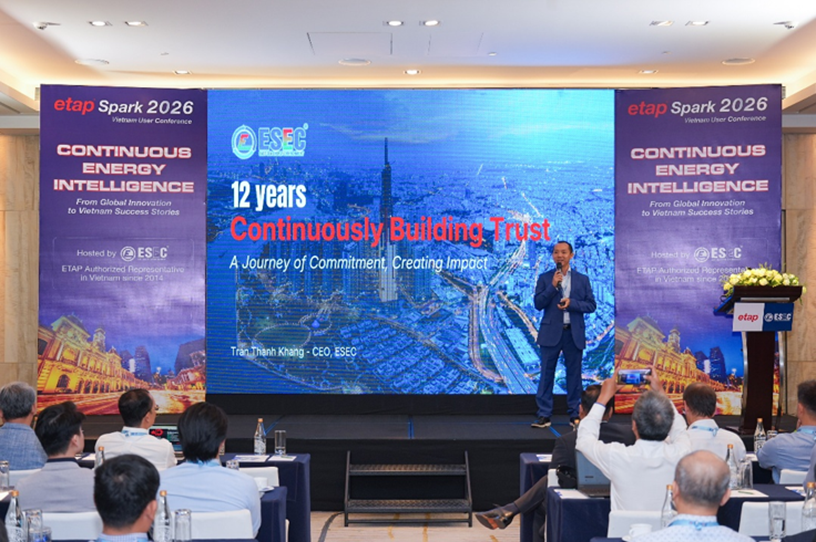
Energy Intelligence – From Data to Smarter Decision-Making
The growth of renewable energy, Battery Energy Storage Systems (BESS), digital transformation, and increasingly stringent reliability requirements is making energy systems more complex. For businesses, understanding how a system is operating is no longer enough. They also need the ability to analyze conditions, anticipate potential scenarios, and evaluate different options before making operational decisions. This is where Energy Intelligence is gaining increasing attention.
Rather than simply collecting and displaying data, Energy Intelligence connects operational data with engineering models and intelligent analytics. This enables businesses to gain greater visibility into system conditions, better understand system behavior, anticipate potential developments, and optimize operational strategies.
At ETAP SPARK 2026 VIETNAM, ETAP presented a new approach to power system management that combines Digital Twin technology, real-time data, physics-based models, Artificial Intelligence (AI), and automation to build continuous energy management capabilities – from simulation, design, and analysis through to power system operation.
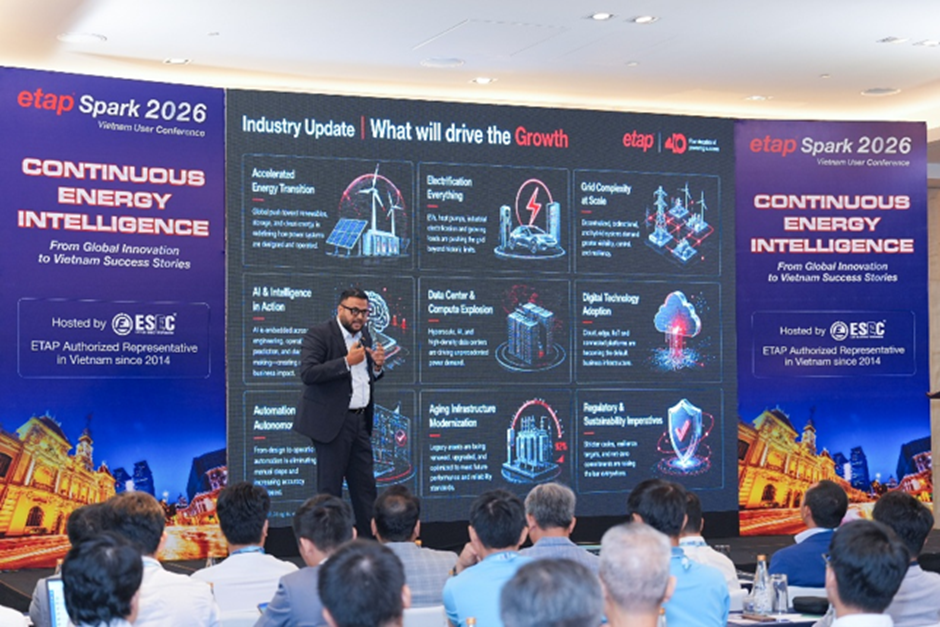
As solar, wind, and BESS continue to be integrated into energy systems, data-driven management and decision-making will become increasingly important to the operational capabilities of businesses.
From ETAP Offline to Digital Twin: The Technology Journey at Hoa Phat Dung Quat 2
Advanced technology only creates real value when it meets technical requirements and can be effectively implemented within the actual operating environment of a business.
This is demonstrated by the implementation journey of the Energy Management and Control System (EMCS) – ETAP at Hoa Phat Dung Quat 2 Integrated Steel Complex. With a large-scale power system and numerous critical loads, Hoa Phat Dung Quat 2 set high requirements not only for the technology solution itself, but also for the capabilities of the implementation partner. The selection process considered multiple criteria, including technical capabilities, experience in similar projects, key personnel, financial capacity, and the ability to meet project timelines.
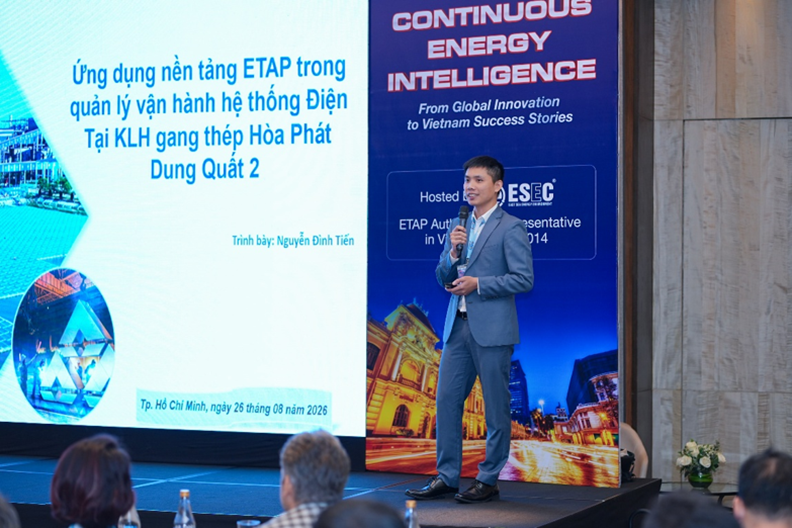
Mr. Nguyen Dinh Tien, Deputy Head of the Equipment Department at Hoa Phat Dung Quat Steel JSC, shares insights into the implementation of the ETAP Real-Time project.
Following the evaluation process, ESEC was selected as the project implementation partner, bringing the ETAP platform from a simulation environment into Hoa Phat Dung Quat 2’s actual power system management and operational environment. The foundation for this collaboration was built through Hoa Phat’s experience with ETAP Offline since 2019, followed by the gradual development of the EMCS – ETAP system, including power system modeling and data connectivity to support system management, monitoring, and operation.
The value of the solution is demonstrated through its application to specific operational scenarios. Scenarios such as islanding, motor starting, and the management of large electrical loads can be simulated and validated, providing the operations team with a stronger basis for evaluating operating strategies and responding proactively to potential system conditions.
The journey from ETAP Offline to EMCS – ETAP at Hoa Phat Dung Quat 2 demonstrates that the value of a technology platform does not lie solely in its features, but in the ability to apply those capabilities to real operational challenges and generate tangible value for the business.
The Synergy of ETAP’s Global Technology and ESEC’s Local Implementation Capabilities
This was also one of the key messages highlighted during the in-depth panel discussion at ETAP SPARK 2026 VIETNAM.
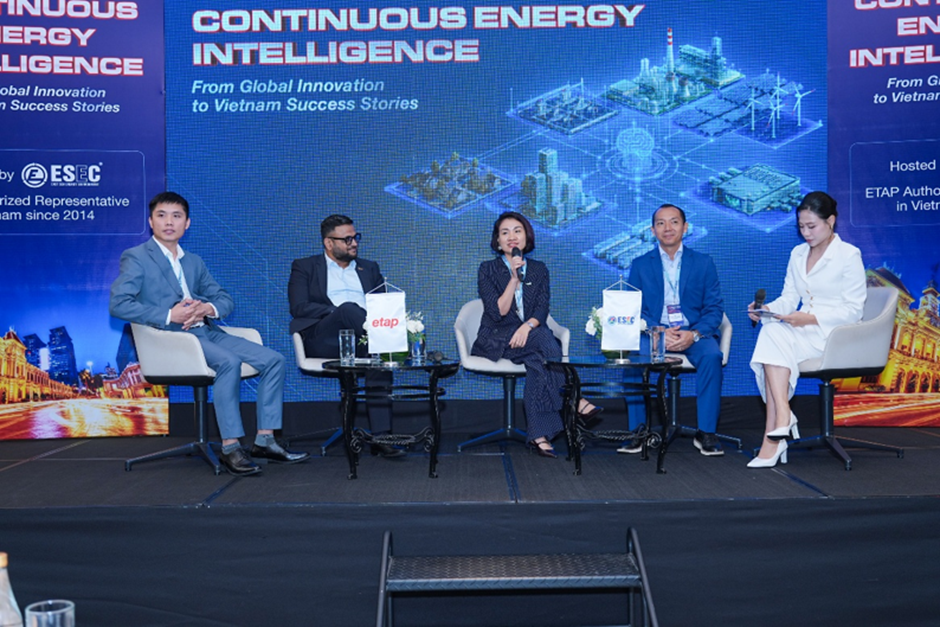
“Knowing about new technology is only the first step. Bringing a technology solution into a real-world system is the decisive challenge”, Mr. Tran Thanh Khang, Chairman of the Members’ Council of ESEC, emphasized that for energy technology projects in heavy industries, successful implementation requires three essential elements: proven technology, local implementation capabilities, and perseverance.
This is also why the role of an implementation partner is becoming increasingly important in the digital transformation of energy systems.
Global technology platforms can provide advanced tools and methodologies. However, applying these technologies effectively to a specific power and energy system requires a deep understanding of the operating environment, existing infrastructure, technical requirements, and business challenges of each customer.
Over its 12-year journey with ETAP in Vietnam, ESEC has progressively built its capabilities through training, consulting, technical services, and solution implementation. From more than 10 ETAP Offline licenses in Vietnam in 2014, the ETAP ecosystem in Vietnam has now expanded to more than 200 software licenses and over 100 direct users across industries including power, oil and gas, petrochemicals, mining, infrastructure, and manufacturing.
Alongside market development, ESEC and ETAP have also established ETAP Power Labs at nine universities, bringing power system simulation and analysis technologies closer to lecturers and students while helping foster the next generation of engineering talent.
Continuing the Journey Toward Intelligent Energy
Although ETAP SPARK 2026 VIETNAM has come to an end, the stories and perspectives shared at the event point toward a broader journey for Vietnam’s energy sector. As power systems become increasingly complex, businesses need more than conventional monitoring tools. The ability to connect data, engineering models, and intelligent analytics to support decision-making will become increasingly important in strengthening operational capabilities.
Building on the capabilities and experience accumulated through 12 years of developing ETAP in Vietnam, ESEC remains committed to connecting advanced energy technologies with the real-world needs of businesses, contributing to more efficient, reliable, and intelligent power system operations.
